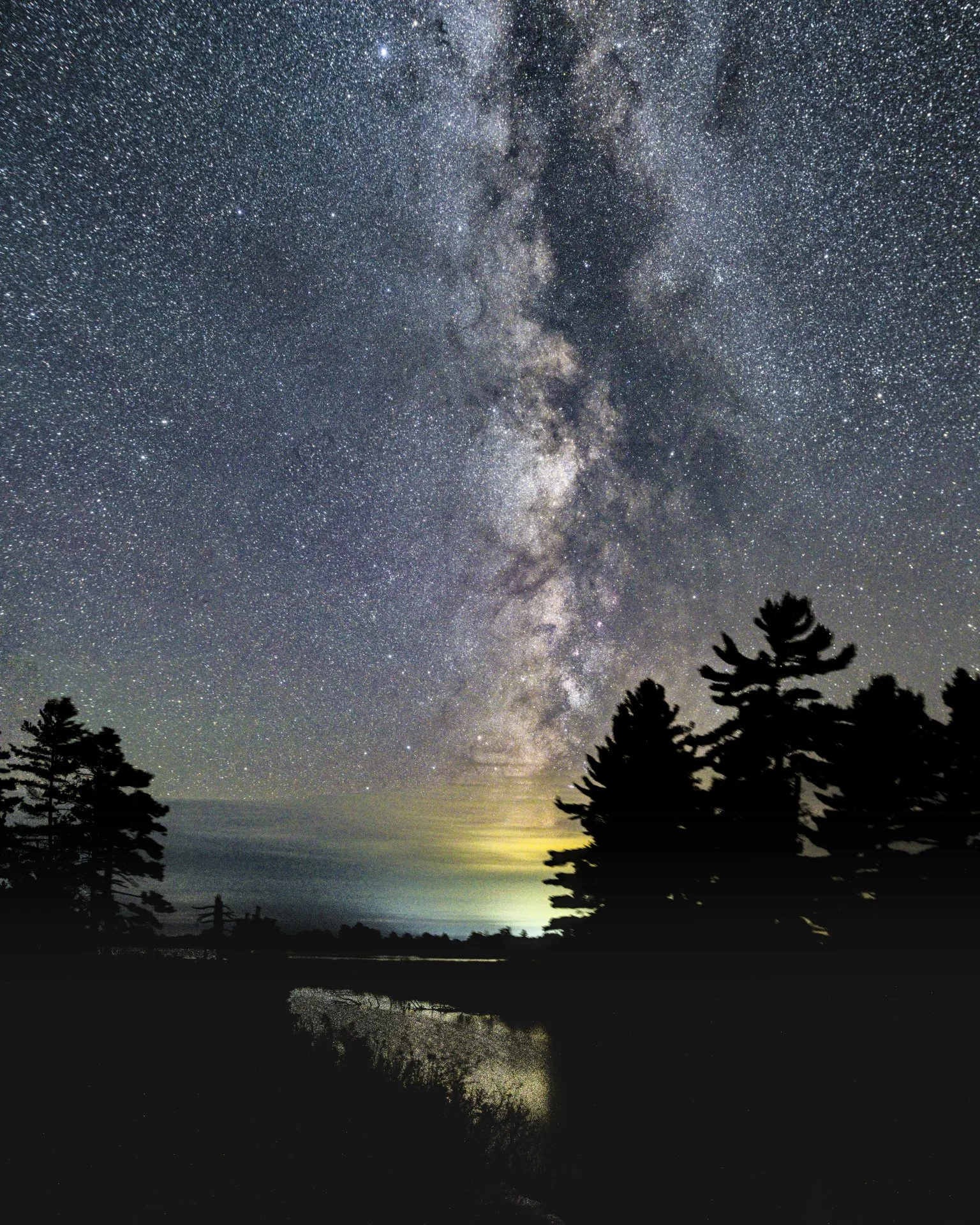
This Milky Way photo is from a three-night session we did at Seney National Wildlife Refuge. The refuge isn’t generally open for night access, but we took a workshop with another photographer who arranged it for us. During the summer and spring months, this area is known for its loons. Most were gone by the time we got there.
Seney is a series of large pools, connected by short channels, like the one in the foreground of this photo. A single lane dirt road winds between them. We’re standing in one of the few small turnouts where a car can stop without blocking the road.
It’s difficult to convey exactly how dark it is here. The glow on the horizon is the street lights of Manistique, MI, over 20 miles away. That’s the nearest source of artificial light. Our eyes adjusted fairly well to allow us to maneuver in the dark. Our cameras didn’t pick up any light from the land. Even at maximum amplification, the signal recorded in our digital files is essentially black.
The image is a vertical panorama of three tracked images. The stars move through the night sky. Our cameras have software to track them. We can get one to two minutes of exposure using this method. The additional light we can gather produces an image with less noise and sharper detail.
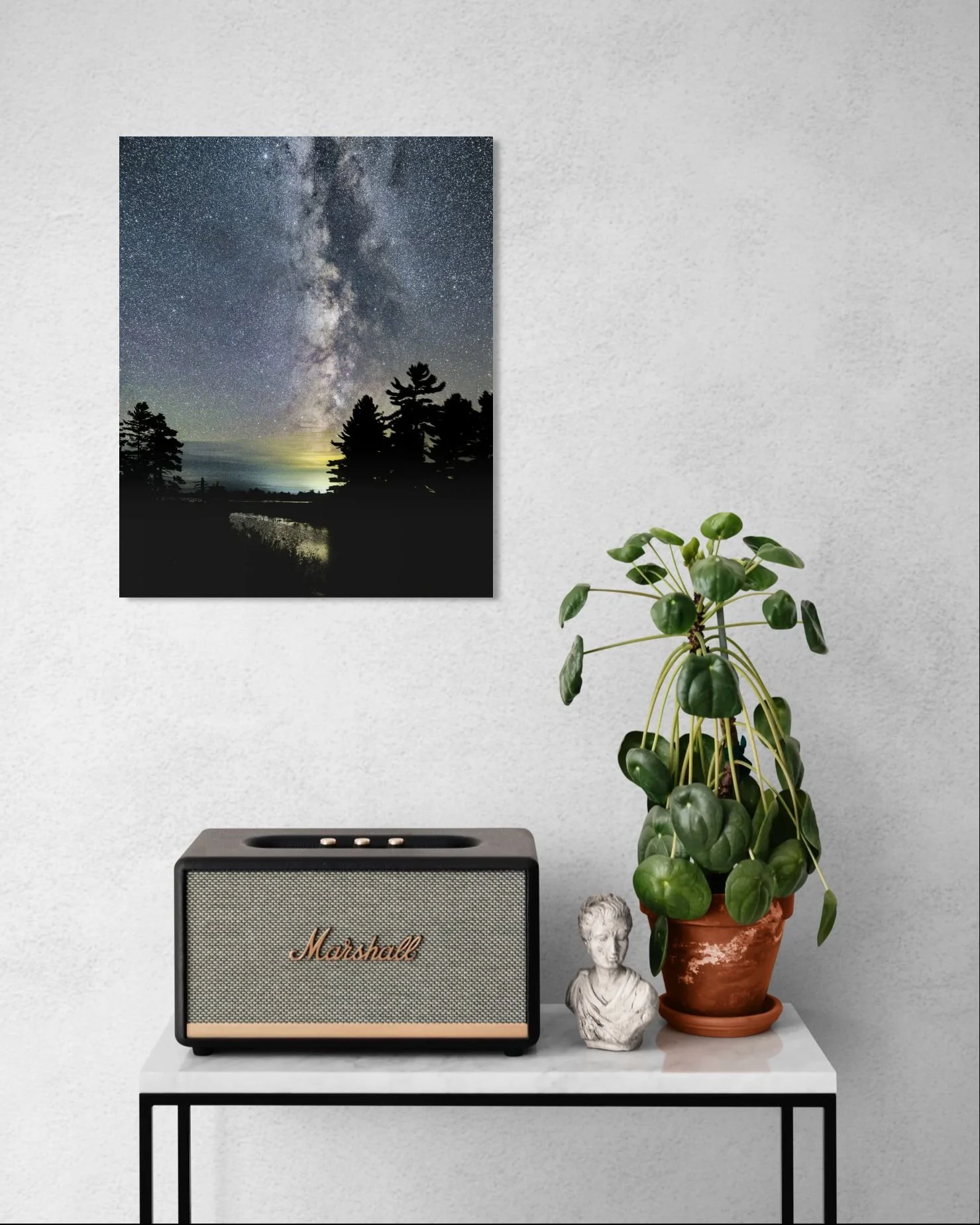
Our images are printed on acid-free photo paper that should last 50 to 100 years without any degradation in image quality. With appropriate framing and care, they should last indefinitely.
This Milky Way photo is from a three-night session we did at Seney National Wildlife Refuge. The refuge isn’t generally open for night access, but we took a workshop with another photographer who arranged it for us. During the summer and spring months, this area is known for its loons. Most were gone by the time we got there.
Seney is a series of large pools, connected by short channels, like the one in the foreground of this photo. A single lane dirt road winds between them. We’re standing in one of the few small turnouts where a car can stop without blocking the road.
It’s difficult to convey exactly how dark it is here. The glow on the horizon is the street lights of Manistique, MI, over 20 miles away. That’s the nearest source of artificial light. Our eyes adjusted fairly well to allow us to maneuver in the dark. Our cameras didn’t pick up any light from the land. Even at maximum amplification, the signal recorded in our digital files is essentially black.
The image is a vertical panorama of three tracked images. The stars move through the night sky. Our cameras have software to track them. We can get one to two minutes of exposure using this method. The additional light we can gather produces an image with less noise and sharper detail.
Our images are printed on acid-free photo paper that should last 50 to 100 years without any degradation in image quality. With appropriate framing and care, they should last indefinitely.